
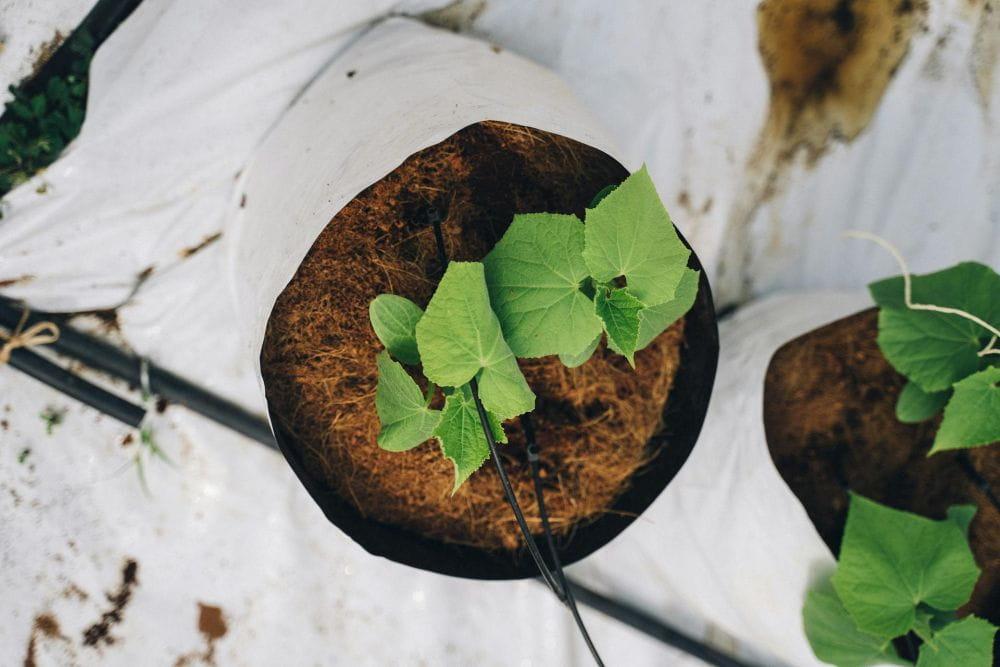
Cocopeat, also known as coconut pith or coir pith, is a natural by-product obtained during the processing of coconut husks. For decades, it was largely treated as agricultural waste in coconut-producing regions. However, with the rapid evolution of modern farming practices and the global shift toward sustainable agriculture, cocopeat has emerged as a highly valued growing medium across multiple agricultural and industrial sectors.
Today, cocopeat is used extensively in horticulture, hydroponics, nurseries, greenhouse farming, animal husbandry, and industrial applications. Its growing acceptance in international markets is driven by a combination of environmental concerns, superior physical properties, cost efficiency, and suitability for controlled-environment agriculture.
As global agriculture faces challenges such as water scarcity, soil degradation, and climate change, cocopeat offers a practical and scalable solution. This article explores what cocopeat is, how it is produced, its key properties, and why it is increasingly preferred in global agricultural markets.
What Is Cocopeat?
Cocopeat is the spongy, fibrous material that remains after coconut fibres are extracted from coconut husks. It consists primarily of short fibres and pith particles, which together form a lightweight, porous substrate.
Depending on processing methods, cocopeat may be supplied as washed or unwashed, low EC or high EC, and in various quality grades. It is typically compressed into blocks, briquettes, or grow bags for ease of storage and transportation.
Unlike traditional soil, cocopeat is an inert growing medium, meaning it does not provide nutrients on its own but acts as a stable structure for water retention, aeration, and root development.
From Agricultural Waste to Global Resource
Historically, coconut husk by-products posed disposal challenges in coconut-producing regions. With advancements in processing technology and increased awareness of sustainable resource use, cocopeat has been transformed into a valuable commodity.
Countries such as India, Sri Lanka, Indonesia, and the Philippines—major coconut producers—now supply cocopeat to agricultural markets worldwide. Export demand has grown steadily as importing countries seek environmentally responsible alternatives to traditional growing media.
Cocopeat as an Alternative to Peat Moss
One of the most significant factors driving cocopeat’s popularity is its role as a substitute for peat moss.
Peat moss is harvested from wetlands that take thousands of years to regenerate. Environmental regulations in Europe and other regions have restricted peat extraction due to its ecological impact, carbon emissions, and biodiversity loss.
Cocopeat, by contrast:
Is derived from a renewable agricultural by-product
Does not involve destruction of natural ecosystems
Has a significantly lower environmental footprint
Aligns with global sustainability and ESG goals
As a result, many countries now actively encourage the use of cocopeat in place of peat-based media.
Physical and Agronomic Properties of Cocopeat 1. Excellent Water Retention
Cocopeat can retain water up to 8–10 times its dry weight. This property ensures consistent moisture availability to plant roots, reducing irrigation frequency and improving drought resilience.
For regions facing water scarcity—such as the Middle East and parts of East Asia—this characteristic is particularly valuable.
2. High Porosity and Aeration
Despite its high water-holding capacity, cocopeat maintains excellent porosity. The air-filled spaces within the medium allow oxygen to reach plant roots, preventing root suffocation and promoting healthy growth.
This balance between moisture and aeration is difficult to achieve with traditional soil.
3. Structural Stability
Cocopeat retains its physical structure over multiple growing cycles. Unlike soil or some organic substrates, it does not compact easily, ensuring consistent root development and drainage.
This makes cocopeat ideal for greenhouse and hydroponic systems where long-term performance is essential.
4. Favorable pH Range
Cocopeat typically has a pH range between 5.5 and 6.5, which is suitable for most horticultural crops. This reduces the need for extensive pH correction during cultivation.
Cocopeat in Modern Agricultural Systems Greenhouse and Protected Cultivation
Greenhouse farming relies on precision control of growing conditions. Cocopeat provides a uniform, predictable medium that supports consistent crop quality, a critical requirement for export-oriented farms.
Hydroponics and Soilless Farming
Low EC cocopeat is widely used in hydroponic systems due to its inert nature and buffering capability. It allows growers to control nutrient delivery precisely, resulting in higher yields and uniform produce.
Nurseries and Plant Propagation
Cocopeat’s soft texture and moisture stability make it ideal for seed germination and nursery applications. Uniform seedlings are essential for large-scale commercial farming and export supply chains.
Advantages of Cocopeat in Global Trade Lightweight and Compressible
Cocopeat is typically supplied in compressed form, significantly reducing shipping volume and costs. When hydrated, it expands several times its original size.
This makes cocopeat highly economical for long-distance transportation.
Long Shelf Life
When stored properly, cocopeat has a long shelf life without degradation. This is advantageous for importers who maintain inventory over extended periods.
Customisable Grades and Formats
Export buyers can choose from various:
EC levels (Low EC / High EC)
Quality grades (Low, Medium, Destoner)
Packaging formats (blocks, briquettes, grow bags)
This flexibility allows cocopeat to serve diverse international markets.
Global Adoption of Cocopeat Middle East
Due to limited arable land and water scarcity, Middle Eastern countries have widely adopted cocopeat for greenhouse farming and landscaping.
East Asia (Korea, Japan)
Advanced horticulture and hydroponic systems drive demand for consistent, high-quality Low EC cocopeat.
Europe
Environmental regulations and sustainability goals have accelerated the shift from peat moss to cocopeat.
Role of Cocopeat in Sustainable Agriculture
Cocopeat supports sustainable agriculture by:
Reducing dependence on non-renewable resources
Improving water-use efficiency
Enhancing soil structure when used as an amendment
Being biodegradable and reusable
Its adoption aligns with global climate action goals and responsible farming practices.
Quality and Processing Considerations for Export
For export markets, cocopeat must meet strict quality standards, including:
Controlled EC levels
Sterilisation to eliminate pathogens
Removal of sand and impurities (destoner processing)
Consistent packaging and moisture control
Reliable manufacturers follow stringent quality control processes to ensure compliance with international requirements.
Conclusion
Cocopeat has evolved from a discarded by-product into a cornerstone of modern, sustainable agriculture. Its physical properties, environmental advantages, and economic efficiency have made it a preferred growing medium across global markets.
As agriculture continues to shift toward controlled environments, water-efficient systems, and eco-friendly inputs, cocopeat’s importance will only increase. For growers, distributors, and importers alike, cocopeat represents not just a growing medium, but a long-term investment in sustainable agricultural practices.