
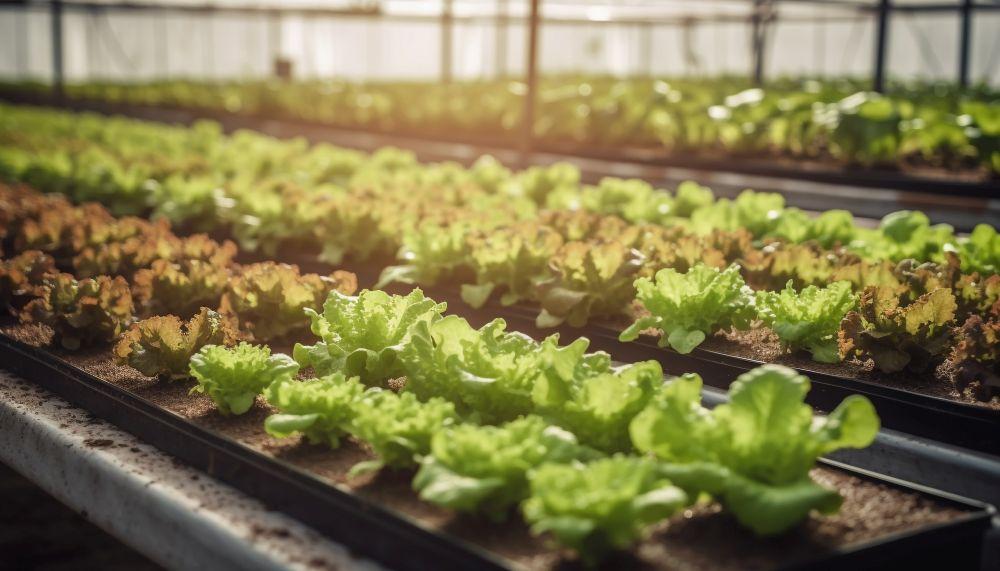
Hydroponic farming has emerged as one of the most efficient and scalable methods of food production, particularly in regions facing land and water constraints. By eliminating soil and delivering nutrients directly through water-based systems, hydroponics enables growers to achieve higher yields, faster growth cycles, and consistent crop quality.
However, the success of hydroponic systems depends heavily on the choice of growing medium. Export-oriented hydroponic farms require absolute control over water, nutrients, and root-zone conditions to meet strict international quality standards. Low EC cocopeat has become the preferred growing medium in such systems due to its stability, predictability, and compatibility with precision agriculture.
This article explores why cocopeat is widely adopted in hydroponic farming and why export growers consistently prefer it over alternative substrates.
The Importance of Growing Media in Hydroponics
Although hydroponics eliminates traditional soil, a growing medium is still required to support plant roots, retain moisture, and provide aeration. The ideal hydroponic medium must be:
Chemically inert
Structurally stable
Capable of retaining water while allowing air flow
Free from pathogens and contaminants
Any inconsistency in the growing medium can lead to nutrient imbalance, root stress, or disease—risks that export growers cannot afford.
What Makes Cocopeat Suitable for Hydroponics? Low EC and Controlled Salt Levels
Low EC cocopeat undergoes washing and, in many cases, buffering to remove excess salts. This process ensures that the growing medium does not interfere with nutrient solutions supplied to plants.
For hydroponic systems, where nutrients are precisely formulated, even small variations in salt content can affect plant health. Low EC cocopeat provides a neutral base that supports exact nutrient management.
Excellent Water Retention with Aeration
Cocopeat retains significant amounts of water while maintaining sufficient air-filled porosity. This balance is critical in hydroponics, as roots require both oxygen and moisture for optimal growth.
Unlike some substrates that become waterlogged or compacted over time, cocopeat maintains its structure, ensuring consistent root-zone conditions throughout the crop cycle.
Structural Stability and Reusability
In commercial hydroponic operations, growing media are often reused across multiple cropping cycles. Cocopeat’s high lignin content gives it structural stability, preventing breakdown and compaction.
This durability reduces replacement frequency, lowers operational costs, and ensures consistent performance—an important consideration for export farms operating at scale.
Predictable Nutrient Management and Buffering Capacity
One of the key reasons export growers prefer cocopeat is its buffering capability. Buffered cocopeat stabilises calcium, magnesium, and potassium levels, preventing sudden nutrient imbalances.
This predictability allows growers to:
Maintain consistent nutrient formulations
Reduce corrective interventions
Achieve uniform crop growth
For export markets demanding consistent size, colour, and quality, this reliability is invaluable.
Disease Control and Hygiene Advantages
Disease outbreaks can result in complete crop loss, shipment delays, and reputational damage. Cocopeat offers significant advantages in disease management when properly processed and sterilised.
High-quality cocopeat is:
Free from soil-borne pathogens
Sterilised to eliminate harmful organisms
Resistant to fungal growth when properly managed
These characteristics reduce reliance on chemical treatments, supporting cleaner and more sustainable production.
Water Efficiency and Sustainability in Hydroponics
Water efficiency is a critical concern for hydroponic farms, particularly in export-driven regions with limited water resources. Cocopeat’s water retention properties reduce water wastage and improve irrigation efficiency.
By holding moisture near the root zone, cocopeat minimises nutrient runoff and evaporation losses. This not only conserves water but also reduces fertiliser consumption, contributing to cost savings and environmental sustainability.
Comparison with Other Hydroponic Growing Media
Export growers often evaluate cocopeat against alternatives such as rockwool, perlite, and clay pellets.
Cocopeat vs Rockwool
Cocopeat is biodegradable; rockwool is not
Cocopeat supports better moisture buffering
Rockwool disposal poses environmental challenges
Cocopeat vs Perlite
Cocopeat retains water more effectively
Perlite provides aeration but limited moisture storage
Cocopeat vs Clay Pellets
Cocopeat offers better root contact
Clay pellets are heavier and less moisture-retentive
Cocopeat’s balance of water retention, aeration, and sustainability gives it a competitive edge.
Export Market Requirements and Compliance
Export hydroponic farms must meet strict quality and compliance standards, including:
Uniform produce quality
Residue control
Sustainable input usage
Traceable sourcing
Cocopeat supports these requirements by enabling consistent cultivation and reducing chemical dependency.
Importers and buyers increasingly inquire about growing media used, making cocopeat a preferred choice in transparency-driven markets.
Applications in Export Crops
Cocopeat is widely used in hydroponic cultivation of:
Tomatoes
Cucumbers
Capsicum
Lettuce and leafy greens
Strawberries
Herbs
These crops are highly sensitive to root-zone conditions, making cocopeat an ideal substrate.
Conclusion
Low EC cocopeat has become an integral component of modern hydroponic farming, particularly for export-oriented operations. Its stability, predictability, and compatibility with precision nutrient management make it a preferred growing medium for achieving consistent, high-quality yields.
As hydroponics continues to expand globally, driven by sustainability and food security concerns, cocopeat’s role will only become more prominent. For export growers, cocopeat is not just a growing medium—it is a strategic input that supports quality, compliance, and long-term profitability.