
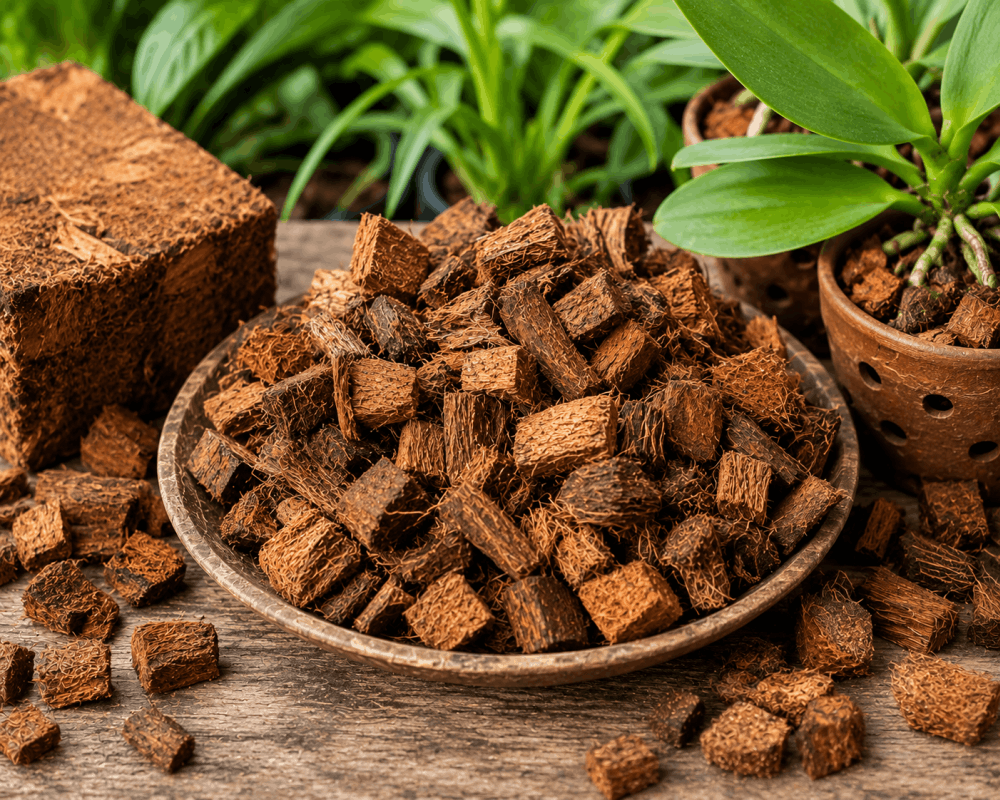
Choosing the right growing medium is essential for healthy plant growth, especially for orchids, anthuriums, hydroponic systems, and other plants that require excellent aeration and drainage. Among the most popular coarse growing media are Coco Husk Chips and Bark Chips. Both are widely used in horticulture and landscaping, but they differ in moisture retention, durability, sustainability, and maintenance requirements.
If you're unsure which medium is best for your plants, this guide compares Coco Husk Chips and Bark Chips to help you make an informed decision.
What Are Coco Husk Chips?
Coco Husk Chips are produced from the fibrous husk of mature coconuts. The husks are carefully processed, washed, dried, graded, and compressed into blocks for easy storage and transportation. When soaked in water, the compressed blocks expand into coarse chips that provide excellent aeration, moisture retention, and drainage.
Because they are clean, renewable, and biodegradable, Coco Husk Chips have become a preferred growing medium for orchids, hydroponics, greenhouse cultivation, nurseries, and ornamental horticulture.
What Are Bark Chips?
Bark Chips are pieces of tree bark, usually obtained from pine, fir, or other softwood trees. They are commonly used as orchid growing media, landscape mulch, and decorative ground cover. Bark chips provide good drainage and air circulation but may vary considerably in quality depending on the tree species and processing method.
Comparison: Coco Husk Chips vs Bark Chips
Moisture Retention
Coco Husk Chips
Natural coconut fibre absorbs and stores moisture while still allowing excess water to drain freely. This balanced moisture retention helps reduce watering frequency and supports consistent root hydration.
Bark Chips
Bark chips generally retain less moisture than coco husk chips and may dry out more quickly, especially in warm climates.
Winner: Coco Husk Chips
Drainage
Coco Husk Chips
Their coarse structure creates air pockets that allow excellent drainage while preventing waterlogging.
Bark Chips
Bark chips also provide good drainage but may gradually compact as they decompose.
Winner: Tie
Root Aeration
Healthy roots require oxygen as much as water.
Coco Husk Chips
The large pore spaces between the chips allow continuous airflow around the root system, encouraging vigorous root development.
Bark Chips
Fresh bark chips also provide adequate aeration, although compaction over time can reduce airflow.
Winner: Coco Husk Chips
Durability
Coco Husk Chips
Properly processed Coco Husk Chips decompose slowly and maintain their structure for an extended period, making them suitable for long-term cultivation.
Bark Chips
Bark chips gradually break down, becoming finer over time. Frequent replacement may be required, particularly in humid growing conditions.
Winner: Coco Husk Chips
Sustainability
Coco Husk Chips
Coco Husk Chips are manufactured from coconut husks, a renewable agricultural by-product that would otherwise have limited commercial use. Their production supports waste utilization and sustainable resource management.
Bark Chips
Although bark is a natural material, its availability depends on timber processing and forestry practices.
Winner: Coco Husk Chips
Cleanliness
Coco Husk Chips
Premium-quality Coco Husk Chips are washed, cleaned, and processed to remove dust and impurities before packaging.
Bark Chips
Depending on the source, bark chips may contain dust, sap, or organic debris that requires cleaning before use.
Winner: Coco Husk Chips
pH Stability
Coco Husk Chips
Well-processed Coco Husk Chips generally have a stable, near-neutral pH suitable for many horticultural crops.
Bark Chips
The pH of bark chips varies depending on the tree species and age of the bark, which may influence plant growth.
Winner: Coco Husk Chips
Best Plants for Coco Husk Chips
Coco Husk Chips are particularly suitable for:
Their moisture-retaining yet well-drained structure makes them ideal for plants with sensitive root systems.
Best Uses for Bark Chips
Bark Chips are commonly used for:
While effective in these applications, they generally require more frequent replacement than Coco Husk Chips.
Can They Be Mixed?
Yes. Many professional growers blend Coco Husk Chips with other growing media such as:
These combinations improve drainage, moisture retention, and root aeration according to the specific needs of different plants.
Why Growers Prefer Coco Husk Chips
Professional nurseries and greenhouse operators increasingly choose Coco Husk Chips because they offer:
These advantages make them one of the most versatile growing media available today.
Why Choose Hariom Trading Co.?
Hariom Trading Co. manufactures premium-quality Coco Husk Chips Blocks from carefully processed natural coconut husks. Our chips are thoroughly washed, dried, graded, and compressed into convenient blocks that expand rapidly upon hydration. They provide excellent aeration, moisture retention, and drainage, making them ideal for orchids, hydroponics, greenhouse cultivation, nurseries, floriculture, and ornamental horticulture. Available in multiple grades and block sizes, our products are trusted by domestic and international growers seeking reliable and sustainable growing media.
Conclusion
Both Coco Husk Chips and Bark Chips are useful growing media, but they serve different needs. Bark Chips provide good drainage and are widely used in landscaping and orchid cultivation. However, Coco Husk Chips offer superior moisture retention, excellent aeration, greater durability, consistent quality, and outstanding sustainability.
For growers looking to improve root health, reduce watering frequency, and adopt environmentally responsible cultivation practices, Coco Husk Chips are often the better long-term choice. Premium-quality Coco Husk Chips Blocks from Hariom Trading Co. provide a dependable and eco-friendly growing medium suitable for both professional horticulture and home gardening.